Japan Events 2026
Japan’s annual events worth flying for. By month, with 2026 dates as reference.
Hanami, sumo, Gion. The rest is timing.
Thirty events that justify a flight. Three multi-month anchors (cherry blossoms, autumn leaves, sumo) up top. The rest are month-by-month in chronological order. Dates shown are for 2026; most fall on consistent annual patterns (third weekend of May, August 11-15, sumo’s six-tournament calendar), so this works as planning reference for future years too.
Cherry blossom season (mid-March to early May)
The front moves north. Tokyo and Kyoto peak around the first week of April; Sapporo waits until late April.
A typical 2026 progression, based on average kaika (first-bloom) dates:
| Region | First bloom | Peak window |
|---|---|---|
| Kochi (Shikoku) | March 16 | March 22–26 |
| Tokyo (Kanto) | March 19 | March 28 – April 4 |
| Fukuoka (Kyushu) | March 24 | April 1–8 |
| Osaka (Kansai) | March 26 | April 1–7 |
| Sendai (Tohoku) | March 31 | April 6–12 |
| Sapporo (Hokkaido) | April 19 | Late April – early May |
- Book Kyoto and Tokyo by August. Hanami-week hotels saturate eight months out.
- Use a regional rail pass. Bloom dates shift week-to-week with weather; you want to pivot north or south on short notice.
- Skip the marquee parks if you can. Ueno and the Philosopher’s Path are wall-to-wall. Smaller Tohoku and Hokuriku cities give you the same trees at one-tenth the density.
- Bloom forecasts update weekly from late February. A cold snap can compress a one-week window into three days.
Autumn leaves season (mid-October to early December)
The front moves south. Hokkaido peaks in late October; Kyoto and Osaka wait until early December.
| Region | Peak red leaves |
|---|---|
| Sapporo (Hokkaido) | October 28 |
| Aomori (Tohoku) | November 13 |
| Kanazawa (Chubu) | November 24 |
| Tokyo (Kanto) | November 28 |
| Osaka (Kansai) | December 1 |
| Kyoto (Kansai) | December 5 |
- Kyoto’s last two weeks of November are the breaking point. Hotels go nine months ahead. Nagoya, Otsu, or even Osaka with bullet train commute are workable backups.
- Altitude shifts peak by weeks. Nikko and Hakone color a full month before the basin cities below them.
- Nighttime temple illuminations (Kiyomizu-dera, Kodai-ji) require separate entry tickets and queues from daytime visits.
- Eizan Railway and Arashiyama buses both bottleneck. Budget multi-hour waits at peak.
Sumo grand tournaments (six per year)
Six 15-day tournaments. Tokyo gets three; Osaka, Nagoya, and Fukuoka each get one.
| Tournament | 2026 dates | Venue | Tickets release |
|---|---|---|---|
| Hatsu (Jan) | Jan 11–25 | Ryogoku Kokugikan, Tokyo | December 6, 2025 |
| Haru (Mar) | Mar 8–22 | EDION Arena, Osaka | February 7, 2026 |
| Natsu (May) | May 10–24 | Ryogoku Kokugikan, Tokyo | April 4, 2026 |
| Nagoya (Jul) | Jul 12–26 | IG Arena, Nagoya | May 16, 2026 |
| Aki (Sep) | Sep 13–27 | Ryogoku Kokugikan, Tokyo | August 8, 2026 |
| Kyushu (Nov) | Nov 8–22 | Fukuoka Kokusai Center | September 19, 2026 |
- Queue digitally the minute tickets release. Box seats and weekend chair seats clear in under an hour through the official English portal at sumo.or.jp.
- Masu-seki box seats sell as sets of four. Doesn’t matter how many people you bring — you pay for four cushions.
- Top wrestlers fight late afternoon. Doors open mid-morning; junior divisions wrestle first. Arrive by 2pm if you want to see Juryo bouts before the top division enters.
- Each city has its own flavor. Tokyo is restrained and ceremonial. Osaka is loud. Nagoya is brutally hot. Fukuoka is the year-end climax with the best post-bouts dinner scene.
Sapporo Snow Festival (February 4–11)
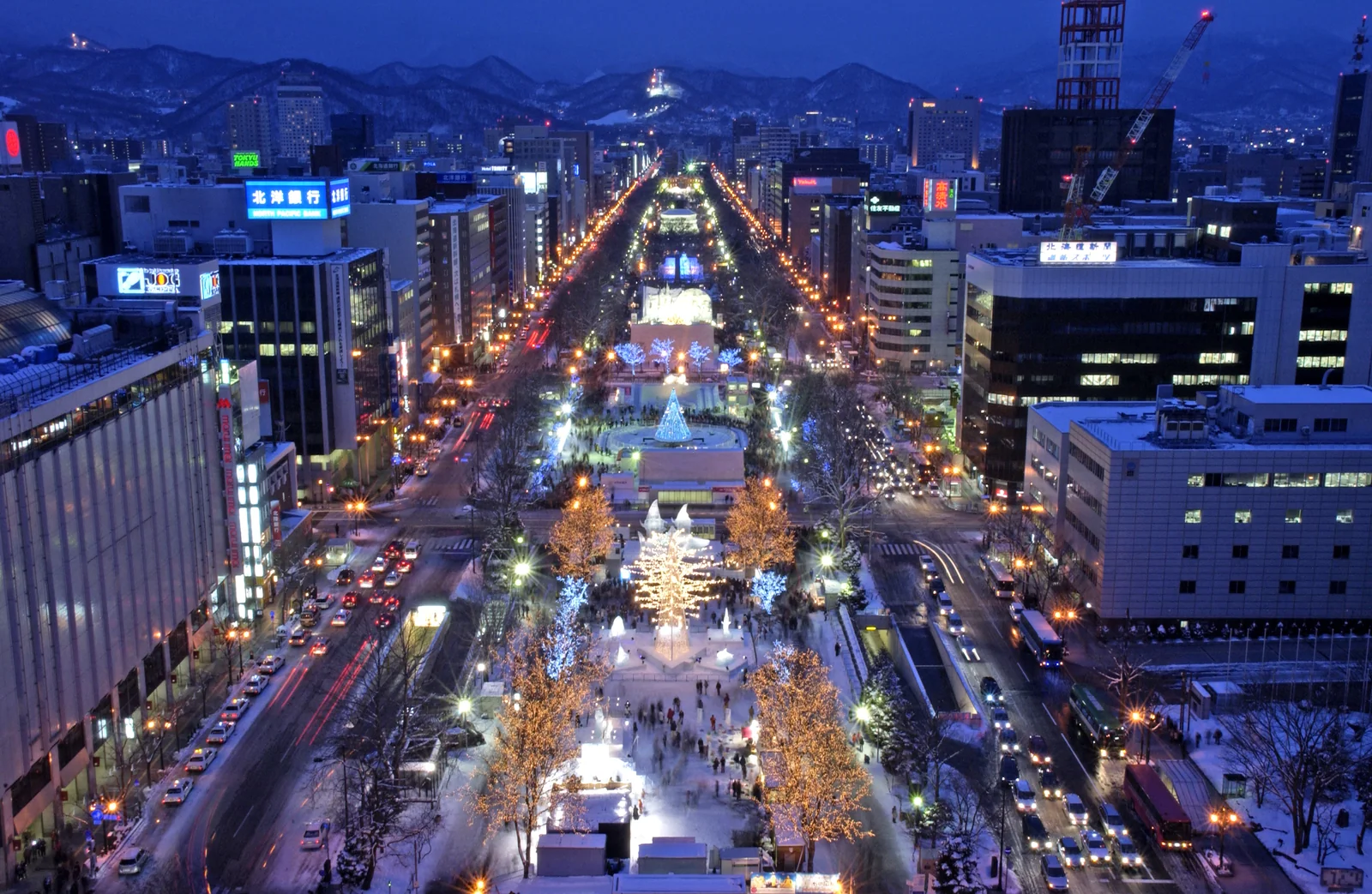
City-scale snow sculpture in Hokkaido’s capital. Two million visitors a week.
Hundreds of ice and snow pieces across three sites: Odori Park has the 15-meter monumental sculptures, Susukino has illuminated ice carvings at night, Tsudome has family slides during the day.
- Book hotels nine months out. Sapporo capacity caps out a full season in advance. New Chitose flights surge in parallel.
- Three sites, two of them after dark. Odori and Susukino reward evening visits under LED illumination; Tsudome shuts at dusk.
- Ice grips on your shoes are mandatory. Packed-snow paths are slick. Buy them at any drugstore on arrival if you forgot.
- Police enforce one-way walking on Odori at peak hours. Plan extra circulation time.
Omizutori (March 1–14)
A 1,250-year-old Buddhist fire ritual at Todai-ji temple in Nara. Monks run flaming six-meter torches along an elevated balcony after dark, raining embers on the crowd below.
The most spectacular night is March 12 — the Kago Taimatsu uses the biggest torches. The actual sacred water-drawing rite (which gives the festival its name) happens in the early hours of March 13.
- Free entry, no tickets. But the prime viewing area below the Nigatsudo balcony fills hours before sunset and gets capped.
- Dress for freezing night air with no movement. You’ll stand still for hours.
- Day-trip from Kyoto or Osaka is easier than getting a Nara hotel. ~45 minutes by train either direction.
- Photo restrictions are strict and updated annually to protect the wooden hall.
Tokyo Marathon (March 1)
A World Marathon Major. 38,500 runners through Shinjuku, Ginza, Asakusa, and the Imperial Palace.
For Six Star Finisher pursuers, the Asia leg of the medal. Civic organization is flawless; crowd support is enormous; sweep buses enforce a 6:30 cutoff with no grace.
- General entry lottery opens August 1. Acceptance rates sit below 10%.
- Charity bibs open earlier (late June) and skip the lottery. Overseas entry fee around $230 USD.
- Mandatory packet pickup the Thursday–Saturday before race day at Tokyo Big Sight. No race-day collection. Non-negotiable.
- Non-runners: plot subway transit around the road closures. The course sweeps through Ginza and the finish at Tokyo Station.
- Power bank rules tightened April 24, 2026. If you’re flying in with charging gear: max 2 power banks per passenger, ≤160Wh each, carry-on only, can’t be charged or used during the flight. Penalty up to ¥1M or 2 years prison. Charge devices fully before boarding.
F1 Japanese Grand Prix (late March)
Round 3 of the F1 calendar at Suzuka. Cherry blossom timing now — the race moved from autumn to spring.
Suzuka is universally rated one of the best permanent circuits in motorsport. Japanese fan culture is the politest in the world; the grandstand atmosphere is unlike anything in F1.
- Hotels in Suzuka and Nagoya book a year ahead. Spring-slot race compounds with hanami demand across Kansai and Chubu.
- Grandstand tickets release on F1 and circuit portals in late autumn the prior year. Move immediately.
- Transit is Kintetsu Railway to Shiroko Station, then shuttle. Post-race wait to board outbound trains routinely hits 3 hours.
- Support races aren’t finalized until race week.
Ashikaga Wisteria Festival (April 11 – May 20)
A 160-year-old wisteria tree and an 80-meter wisteria tunnel in a Tochigi botanical park. Forty days of staggered bloom in pale pink, purple, white, then yellow.
Evening illuminations run April 19 – May 18.
- No advance booking. Just route from Tokyo to Ashikaga Flower Park Station on the JR Ryomo Line.
- Admission fluctuates daily ¥1,200 – ¥2,300 based on bloom condition. You only pay peak when the flowers actually peak.
- Skip Golden Week (early May). Domestic crowds are brutal.
- Tripods are banned in dense zones. Even handheld photography is a struggle at peak.
Takayama Spring Festival (April 14–15)
Twelve Edo-period floats paraded through preserved merchant streets in the Japanese Alps. Mechanical marionette performances during the day; lantern-lit floats at night.
Spring honors the Hie Shrine in the southern half of the old town. Autumn (October 9–10) does the same at Sakurayama Hachimangu in the north — identical pattern, different shrine.
- Local ryokan book a full year out. Takayama is small.
- Limited Express Hida from Nagoya — book exactly 30 days before travel. Reserved seats vanish instantly.
- Rain cancels the parade. Floats stay in their storehouses. There’s no rain-day version of this festival.
Sanja Matsuri (May 15–17 in 2026; always the third weekend of May)
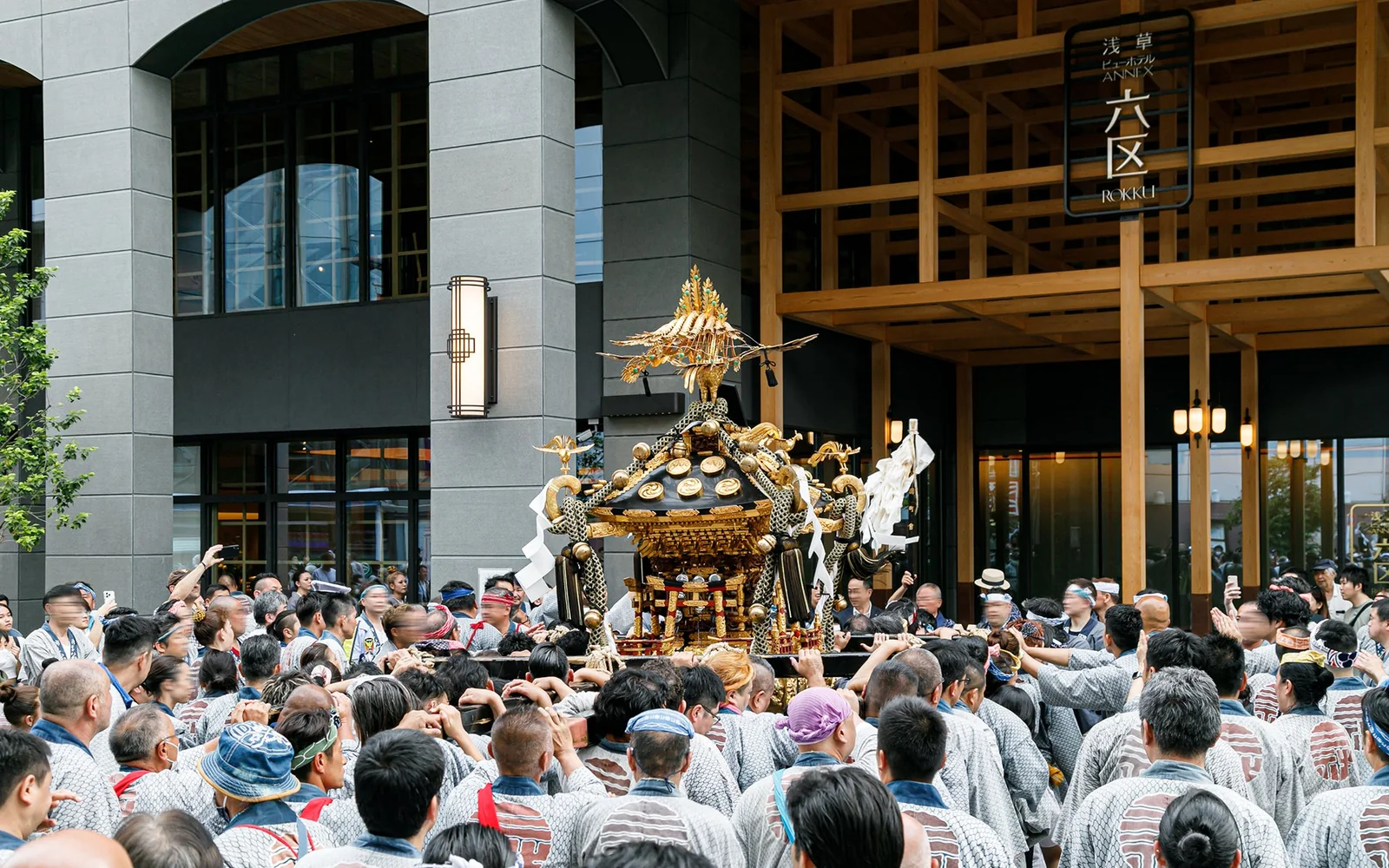
Tokyo’s most intense Shinto festival. Over 100 portable shrines hauled through Asakusa by competing neighborhood teams. Two million attendees over the weekend.
If you’ve never seen visible irezumi on Japanese streets, this is when. Senso-ji territory becomes physically lawless in the best way for three days.
- Asakusa hotels book four months out. Not as bad as Gion, but still.
- Streets around Senso-ji close to traffic. Stay mobile; the mikoshi parade routes shift dynamically.
- Not for small kids or anyone with mobility limits. Crowds near the main mikoshi push and jostle.
- Sunday routing is set by police on the day based on crowd safety metrics.
Aoi Matsuri (May 15)
One of Kyoto’s three great festivals. A solemn procession of 500 participants in Heian-period court dress, escorted by ox-carts from the Imperial Palace to the Kamo shrines.
The opposite of Sanja in every way — quiet, slow, aristocratic, almost reverent. A living museum of imperial Kyoto.
- Reserved seating goes on sale around April 1 via Ticket Pia. ¥5,000 – ¥20,000 depending on location.
- Without paid seats, arrive two hours early for any public sightline.
- Procession leaves the Imperial Palace at 10:30 AM and reaches Kamigamo by afternoon.
- Rain postpones the whole thing. Silk costumes can’t get wet. Announcement is the evening prior.
Sanno Matsuri (June 7–17, grand procession June 7)
Tokyo’s third great Edo festival. 2026 is an even year, which means the Jinkosai grand procession actually runs — 300 participants and floats marching nine hours through Nagatacho and the Imperial Palace gates.
In odd years, the festival exists as stationary shrine rituals only. The parade is the reason you fly for it.
- No tickets, no reservations. Public street parade.
- The 20-km route makes vantage points easy. Unlike Asakusa or Kyoto, you don’t have to hold your spot for hours.
- Rainy season is real. Early June in Tokyo is humid and unpredictable. Plan rain gear.
- Heatstroke risk on the daytime unshaded segments. Hydrate hard.
Gion Matsuri (July, parades July 17 and 24)
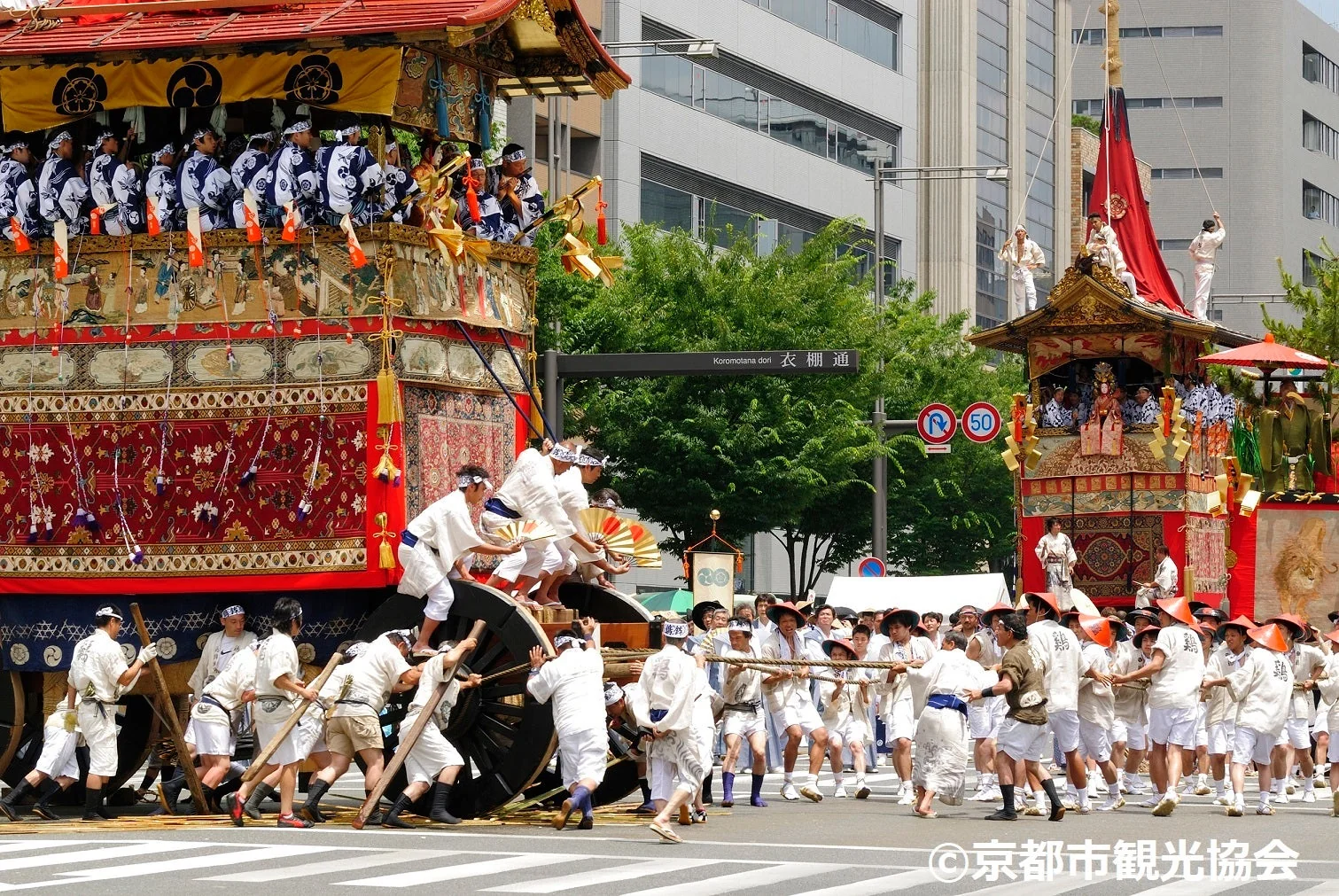
Kyoto’s biggest festival. A month-long calendar on paper; two days you actually plan around.
Originated in 869 as a Shinto plague-appeasing ritual and still runs the same procession 1,150 years later. Thirty-four Yamahoko floats — three stories tall, draped in Silk Road textiles — get pulled through downtown on July 17 (Saki Matsuri) and July 24 (Ato Matsuri).
The three evenings before each parade are Yoiyama nights. Downtown closes to traffic, floats stand lit in the street, Kyoto in yukata becomes the city’s biggest summer block party.
- Book Kyoto a year out. Mid-July saturates faster than any other Kyoto window.
- Saki Matsuri July 17 is the bigger spectacle. Ato Matsuri July 24 is calmer. Pick the second if crowds aren’t your thing.
- Reserved parade seating opens in early spring via official Kyoto tourism portals.
- Heat is brutal. Kyoto sits in a basin. Daytime parade routes trigger heatstroke routinely.
Tenjin Matsuri (July 24–25)
One of Japan’s top three festivals. Peaks the evening of July 25 with a river procession — 100+ illuminated boats hauling portable shrines down the Okawa, timed to fireworks overhead.
Aquatic ceremonial pageantry plus Osaka’s loudest festival culture, against fireworks reflected on the water. The closest thing Japan has to a single-night sensory overload.
- Riverside restaurant seating or commercial spectator boats book months out. Public bridge viewing is functionally impossible — police enforce “keep moving” to prevent crushing.
- Daytime land procession features drummers and traditional costumes through the urban grid before boarding at dusk.
- Heavy rain grounds the river boats. Land rituals continue.
- Stacks on top of Sumida Fireworks the same night — pick one city.
Sumida River Fireworks (July 25)
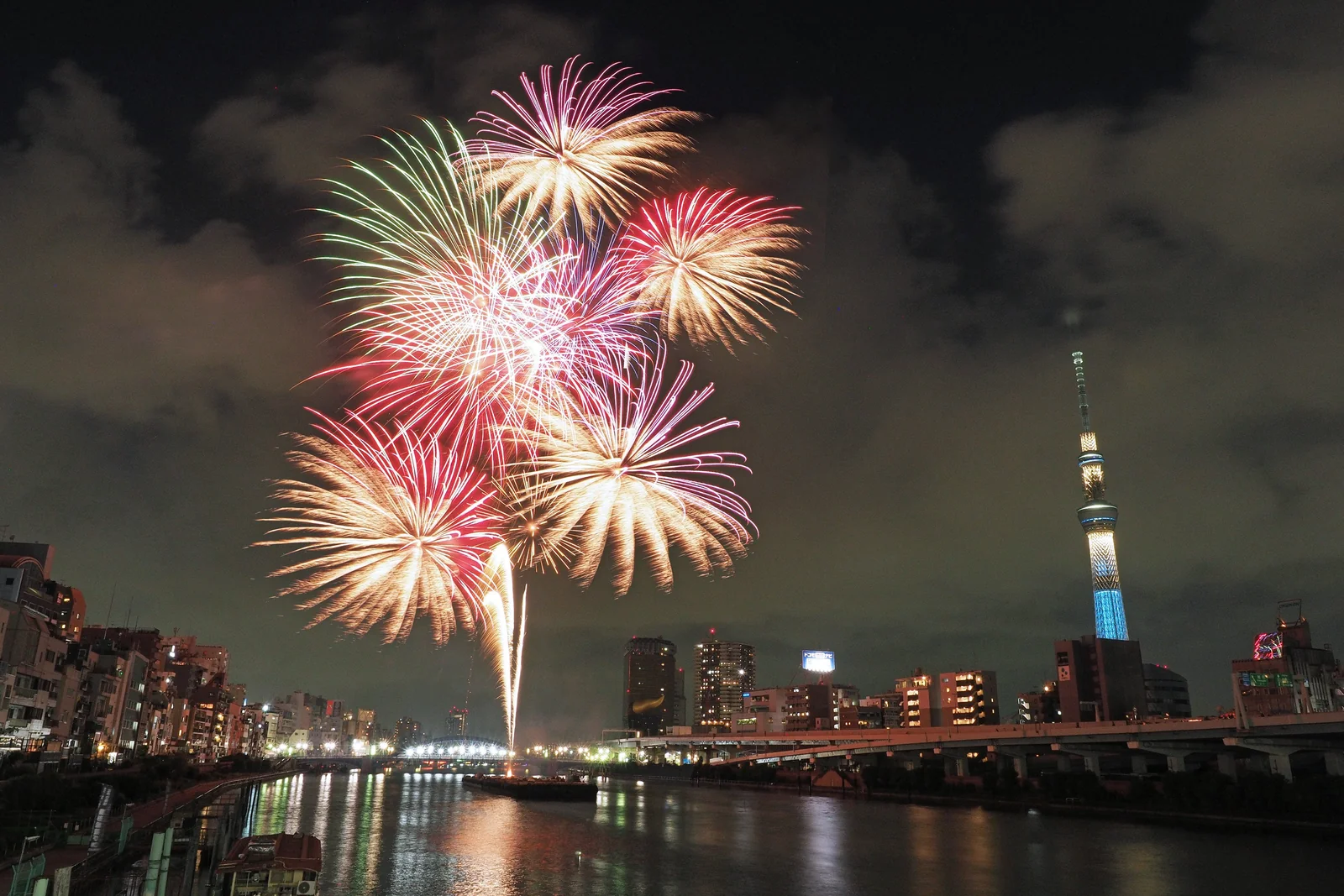
Tokyo’s oldest and most famous fireworks festival. 20,000 shells launched from two barges on the Sumida, framed by the Skytree.
A million people on the riverbanks. The Asakusa and Mukojima sides both lock down to traffic.
- River-view hotel rooms book a year out. Yakatabune pleasure boats too.
- Underprepared visitors end up behind tall buildings with zero sightline. Scout your spot during the day.
- Subway stations stagger entry after the show to prevent platform crushing. Budget patience.
- High wind or typhoon = immediate cancellation. No postponement.
Fuji Rock Festival (July 24–26)
Japan’s largest outdoor music festival. Naeba ski resort, deep in the Niigata mountains. Polite, immaculate, alpine, and frequently torrential.
Global headliners and indie acts across woodland stages. The festival is famous less for its lineup than for its operating ethos — pristine grounds, disciplined trash sorting, and a temporary-city feel.
- Pre-release tickets February 20, general May 16. 3-day pass ¥57,000 pre-release, ¥59,000 general.
- Parking passes only sell bundled with two entry tickets. No standalone parking.
- “Moon Caravan” auto-campers arrive July 23 and don’t move vehicles until July 27. Plan around the lock-in.
- Heavy-duty Gore-Tex and hiking boots are not optional. Mountain rain is guaranteed.
- Shinkansen to Echigo-Yuzawa then shuttle. The ¥18,000/day “go round” pass is worth it for fast lanes and lounge access.
Nagaoka Fireworks (August 2–3)
Two evenings of monumental pyrotechnics on the Shinano River, including the Sho-Sanjakudama shell and the multi-kilometer “Phoenix” sequence timed to memorial music for the 2004 earthquake recovery.
Routinely brings the audience to tears. One of Japan’s top three fireworks festivals.
- 100% paid seating now. No free viewing. Lottery runs through May–June.
- International travelers usually book bundled tours ($720–$1,349 range) with Tokyo-departure Shinkansen, seat, and hotel as a package.
- Joetsu Shinkansen from Tokyo is 100 minutes. Post-show, the rush back to Nagaoka Station is a multi-hour wait.
- High wind or rain = immediate cancellation.
Aomori Nebuta Matsuri (August 2–7)
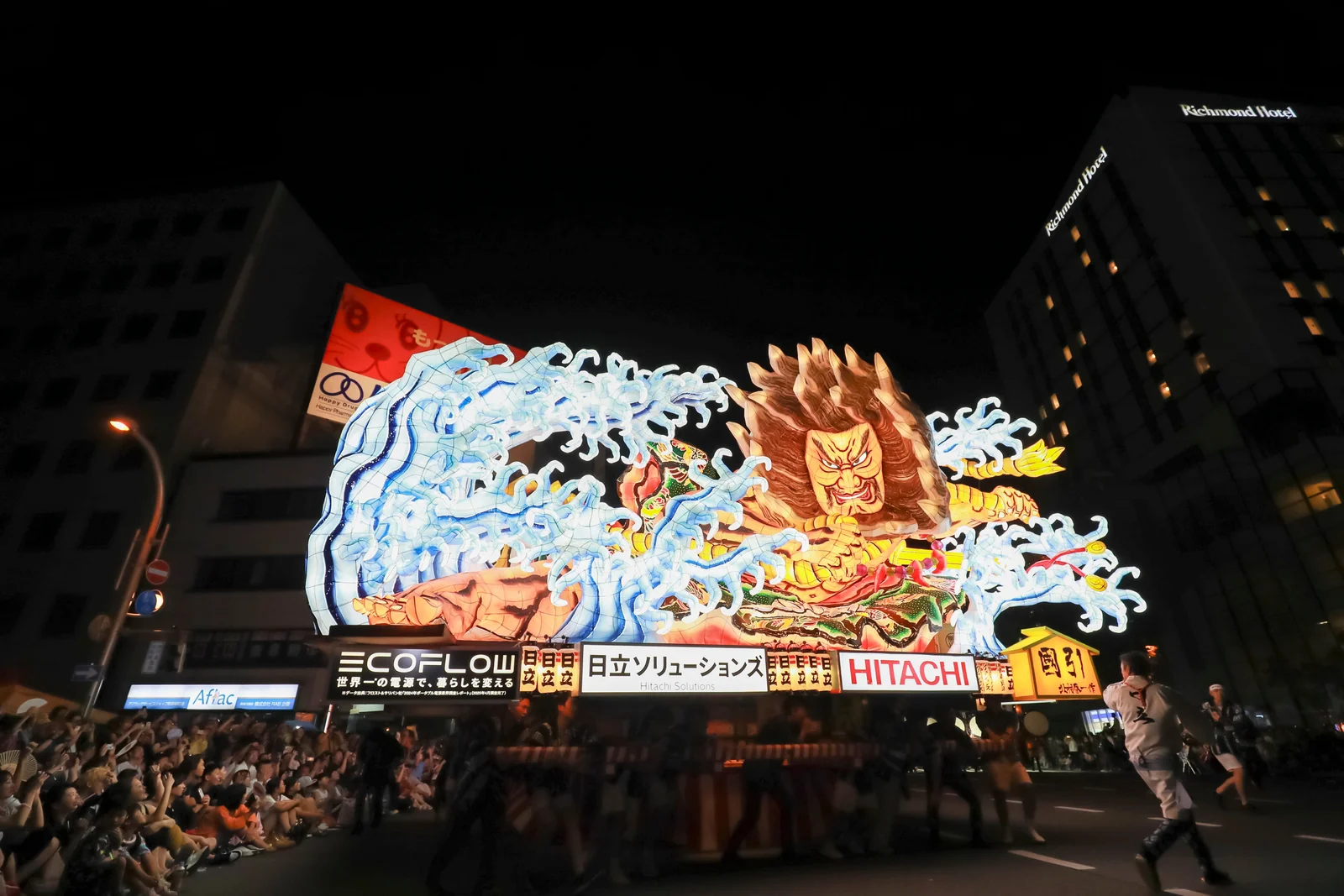
Tohoku’s fire festival. Massive illuminated paper-and-wire floats of mythological warriors hauled through Aomori streets, accompanied by tens of thousands of haneto dancers chanting Rassera.
Visually the most cinematic festival on this list. Float colors against full dark, drums pounding, dancers chanting. Three million visitors.
- Aomori City hotels are vastly oversubscribed. Book Hirosaki or Morioka and commute in by rail.
- Paid spectator seating along the 3.1 km route sells through the official portal in advance.
- Rent a haneto costume and you can join the parade. Open participation, not just spectating.
- Daytime parade and marine procession on August 7 — fireworks over Aomori Bay with floats on boats.
Akita Kanto Matsuri (August 3–6)
Harvest festival in Akita where participants balance 12-meter bamboo poles strung with 46 lanterns — on their palms, foreheads, shoulders, and lower backs. Each pole weighs 50 kg.
Acrobatic mastery in shifting winds. 250 poles swaying against the night sky looks like a forest of gold lanterns.
- Bleacher seats along Chuo-dori are released in late spring via domestic portals.
- Street-level free viewing requires hours of holding position before twilight.
- Daytime competitions (myogi taikai) are skill-focused; nights are visual.
- Strong gusts can topple a pole. It happens. The crowd ducks.
Sendai Tanabata Matsuri (August 6–8, fireworks August 5)
Japan’s largest Star Festival. Downtown shopping arcades transformed into a tunnel of thousands of 10-meter handcrafted washi-paper streamers.
The opposite of the fire festivals around it. Quiet, elegant, tactile. Rustling paper for kilometers.
- Sendai Station hotels book immediately when the pre-festival fireworks date is announced.
- Decorations live inside covered arcades — rain-proof and sun-proof, which is rare for August festivals.
- 9 AM is the only time for clean photography. By midday, the arcades fill up.
- Decorations get bagged or removed late at night. No late-evening viewing.
Awa Odori (August 11–15)
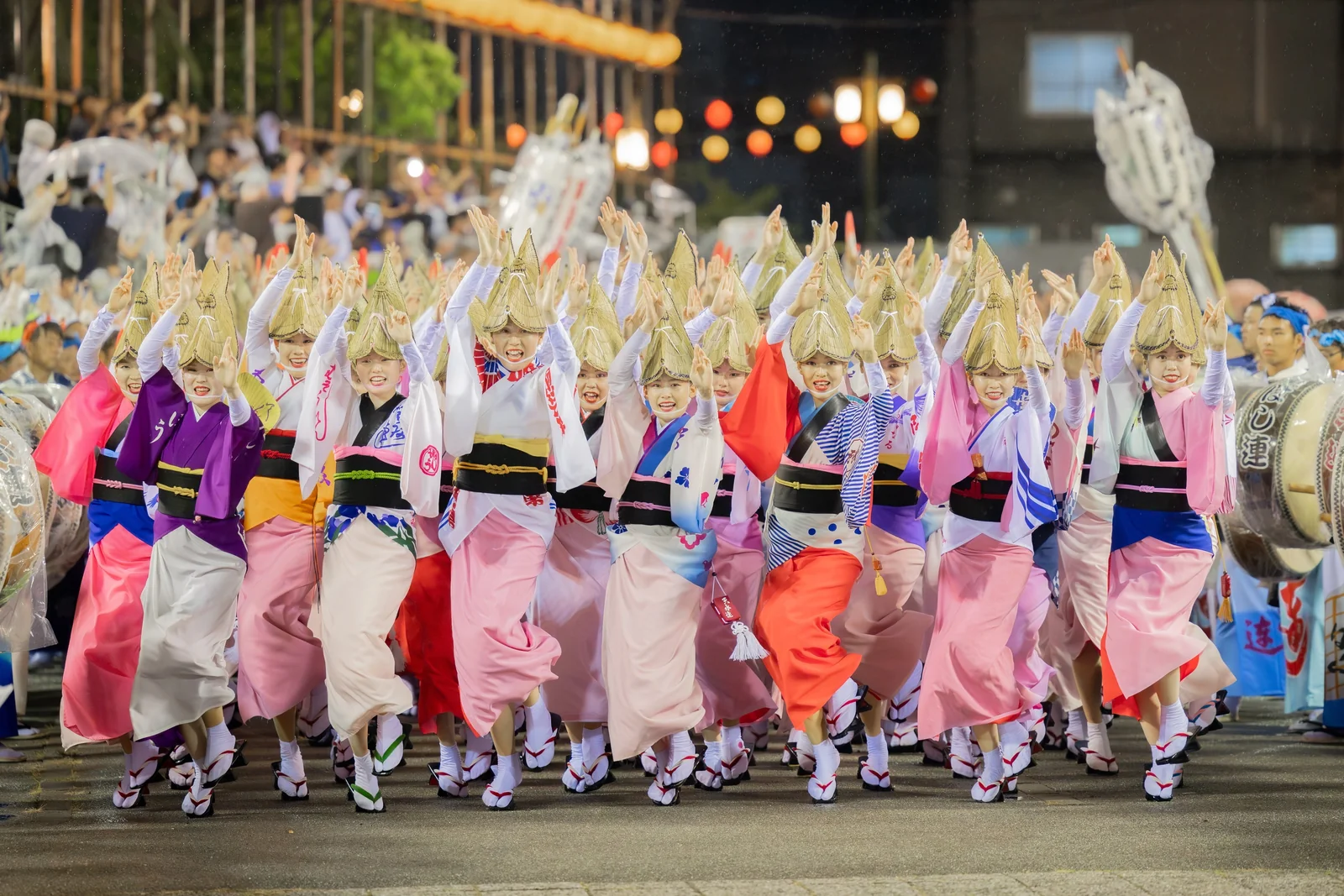
Japan’s largest traditional dance festival. Tokushima city. Over 100,000 dancers in coordinated groups (ren) progressing through the streets to shamisen, taiko, and flutes.
Famously dubbed the “Fool’s Dance.” Infectious, relentless, sweeps up the entire city.
- Tokushima hotels are insufficient. Book Takamatsu, Kobe, or Osaka and commute via bus.
- Reserved seating for street parades sells via domestic portals well ahead.
- Daytime indoor stages, night street parades 6 PM – 10:30 PM.
- Falls inside Obon week. Domestic travel hits its annual peak. Flight and hotel scarcity nationwide.
Summer Sonic (August 14–16)
Dual-city urban music festival. Tokyo (Makuhari Messe in Chiba) and Osaka (Expo’70 Park) run synchronized lineups. Major Asian gateway for Western tours.
- Platinum tickets (¥100,000, 3-day) sell out in seconds at February pre-sale.
- General sale through Creativeman starts early March.
- Indoor air-conditioned stages at Makuhari are vital. Osaka is fully outdoor in August — bring water.
- Tickets from Viagogo, StubHub, and other unauthorized resale get voided at the gate. Don’t.
Kishiwada Danjiri Matsuri (September 19–20)
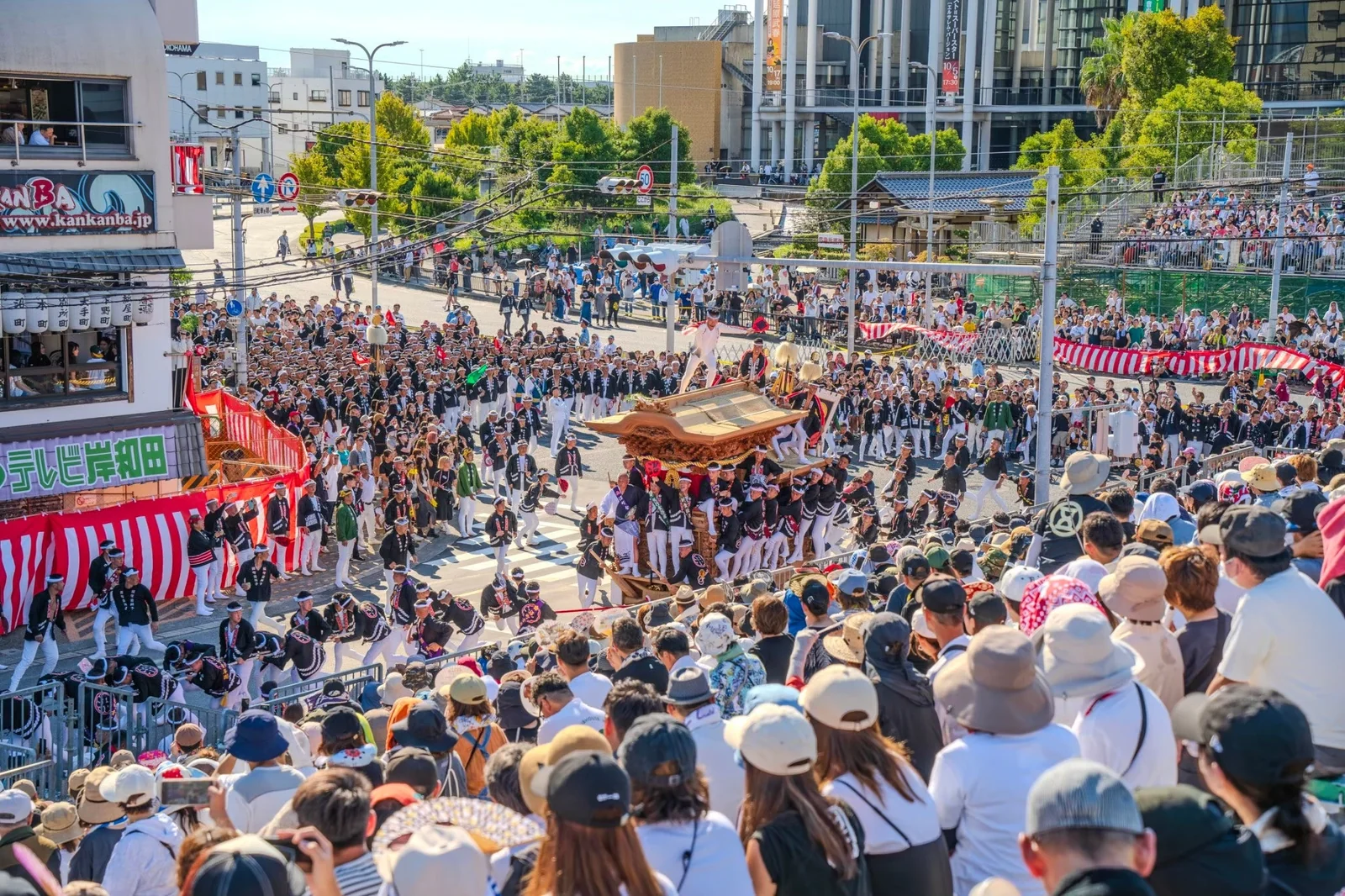
The most dangerous festival in Japan. Neighborhood teams haul four-ton wooden floats through narrow Osaka-prefecture streets at full sprint, drifting them around 90-degree corners with a dancer leaping on the roof.
Unfiltered neighborhood rivalry. Genuine physical danger. The opposite stereotype of polite Japan.
- Nankai Line from central Osaka. Arrive early to claim standing position near a major intersection.
- Sunday is slower — shrine rituals and a parade of lantern-adorned floats pulled by children.
- Obey police lines without exception. Floats crash into storefronts. Bystander injuries happen.
- Serious injuries among pullers happen yearly. Don’t be surprised by mood shifts.
Nagasaki Kunchi (October 7–9)
Suwa Shrine’s autumn festival. 380 years of history. Chinese dragon dances and European-influenced boat floats — the residue of Nagasaki’s centuries as Japan’s only Edo-era international port.
A cultural anomaly. No other Japanese festival looks or sounds like this.
- Sajiki-ken (4-person box seats) open June through August depending on venue (Suwa Shrine, Otabisho, Central Park, Yasaka Shrine). ¥6,500 – ¥36,000 range.
- Free viewing via Niwasaki-mawari — troupes perform spontaneous sets in front of local businesses around town.
- Rain postpones the whole schedule by exactly one day. Cascading.
- Nagasaki’s topography is steep. Walking between street performances is a workout.
Takayama Autumn Festival (October 9–10)
Sister event to the spring festival, in the northern half of Takayama’s old town. Eleven gilded yatai floats; marionette performances; lantern-lit evening procession.
- Only ten floats in 2026. The Gyojintai is out for structural repairs.
- Hida express trains and Nohi buses — book exactly 30 days before travel.
- Arrive October 8 to claim viewing positions before the next day’s procession.
- Rain voids the parade. Floats stay in their storehouses.
Naha Great Tug-of-War (mid-October, dates TBD)
A 15th-century Ryukyuan cultural battle. The rope weighs over 40 metric tons (Guinness record) and gets hauled by tens of thousands of participants down Route 58 in central Naha.
Anyone can join. Cut off a piece of the rope post-event for good luck. Distinctly Okinawan, not mainland Japanese.
- Date typically announced in early summer. Check visitokinawajapan.com for the 2026 confirmation.
- Flights from Haneda or Kansai surge for the October holiday weekend.
- Pre-event parades along Kokusai Street; the tug-of-war takes over Route 58.
- Late-season typhoons can cancel flights and festival both. Build slack into your trip.
Miyajima Water Fireworks (October 18)
Forty minutes of fireworks launched over the water at Itsukushima Bay, framing the floating torii gate. Returned in 2024 after a long absence.
Probably the most photogenic fireworks landscape in Japan.
- Overnight on the island books a year ahead. Limited capacity, fierce demand.
- Most visitors do the ferry round trip from Hiroshima. Plan multi-hour return queues.
- Show runs roughly 6:30 – 7:10 PM. Compact for autumn chill.
- High tide and coastal wind can delay barge deployment.
Jidai Matsuri (October 22)
The “Festival of Ages.” 2,000 participants in costume marching in reverse chronological order from the Meiji Restoration back to the Heian period. Imperial Palace to Heian Shrine.
The most educationally precise festival in Japan. Costumes and props are historically documented.
- Reserved seating at Imperial Palace, Oike Street, or Heian Shrine sells through international tourism portals by early autumn.
- The procession takes 2+ hours to pass any point. Bring a folding seat.
- Standing room along Oike Street stays available without reservations.
- Rain postpones to the following day — silk garments can’t get wet.
Karatsu Kunchi (November 2–4)
UNESCO Intangible Cultural Heritage event in Saga Prefecture (Kyushu). Fourteen lacquered floats shaped like helmets, dragons, and sea bream, hauled through the castle town — and on November 3, dragged through deep beach sand.
The float designs are surreal. The beach dragging is the visual payoff.
- Book Fukuoka (Hakata) hotels and commute in via JR Chikuhi Line (~1 hour).
- Yoi-yama evening parade November 2 lights the floats in lantern light.
- November 3 (national holiday) is the beach-dragging day. Position near where pavement meets sand.
- Late-night return trains to Fukuoka pack out. Confirm timetables in advance.
Chichibu Yomatsuri (December 2–3)
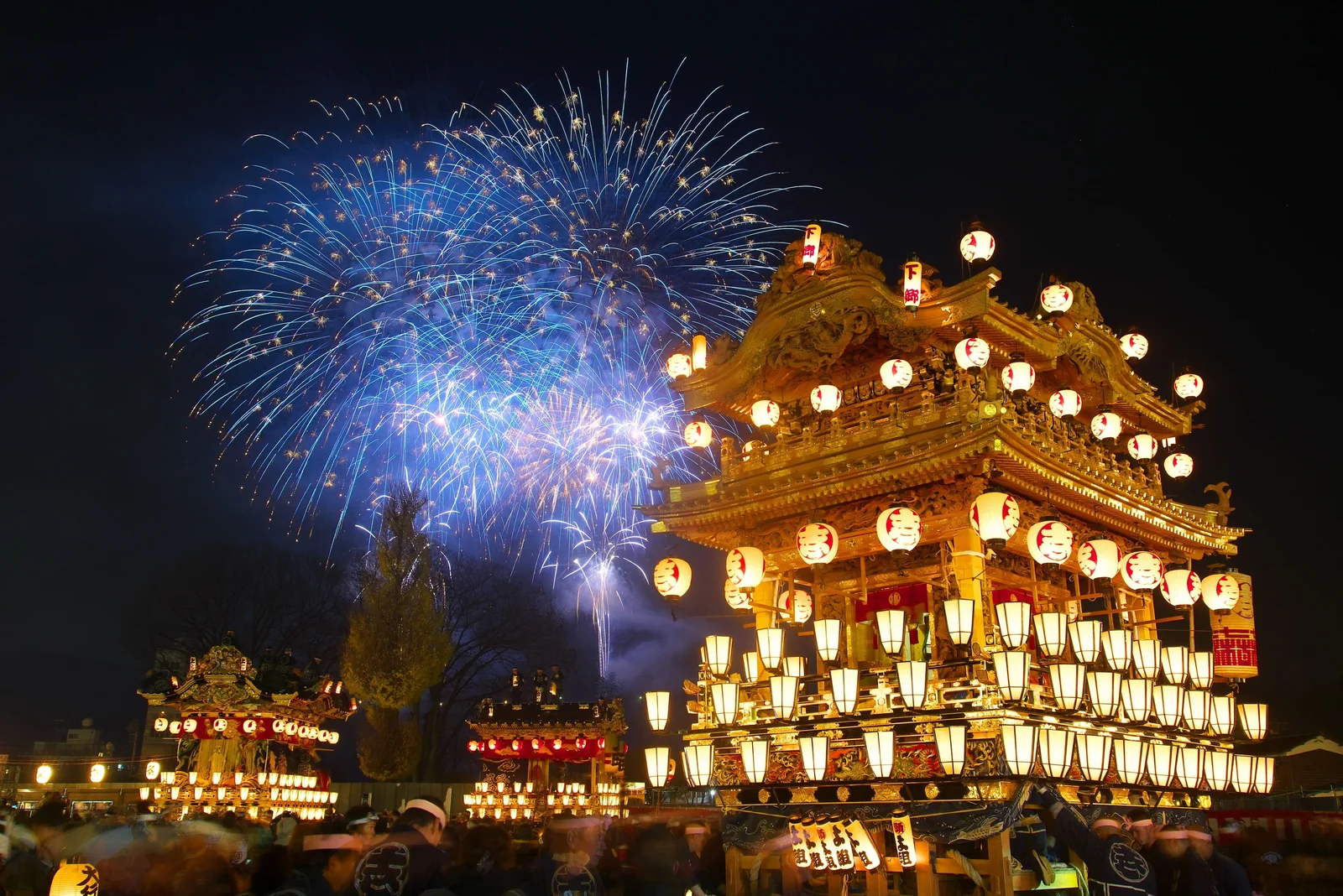
One of Japan’s top three float festivals. Six lantern-covered floats hauled up a steep hill in freezing December darkness, synchronized to a winter fireworks display.
Ancient wooden floats meet winter fireworks. Cinematic.
- Day-trip from Tokyo via the Seibu Red Arrow express from Ikebukuro. Bypasses Chichibu’s hotel shortage.
- Reserved seating near city hall plaza runs through competitive domestic lotteries.
- Thermal layers are non-negotiable. Temperatures collapse after sunset.
- Freezing rain or snow delays the hill climb. Wait it out.